If you have ever wondered why a true Hollywood Hills midcentury home feels different from a generic modern house, the answer is often the land itself. In this part of Los Angeles, steep lots, narrow winding streets, and panoramic views did not just shape the setting. They shaped the architecture, the daily rhythm, and the kind of lifestyle these homes still offer today. If you are drawn to design, light, privacy, and a strong connection to the landscape, this guide will help you understand what makes Hollywood Hills midcentury living so distinct. Let’s dive in.
Why midcentury fits Hollywood Hills
The Hollywood Hills has a built-in relationship with midcentury design. The Hollywood Community Plan describes the hill section of Hollywood as an area of narrow, circuitous streets with single-family homes concentrated in the hills, along with broad public views of the Santa Monica Mountains, the Hollywood Hills, and the city skyline.
That topography matters. According to the City of Los Angeles historic context statement on L.A. Modernism, midcentury modern homes are especially common in affluent hillside neighborhoods within greater Hollywood, and many sit on steep or otherwise difficult sites. In practical terms, these homes were not simply placed in the hills. They were designed in response to the hills.
What defines the architecture
Post-and-beam structure
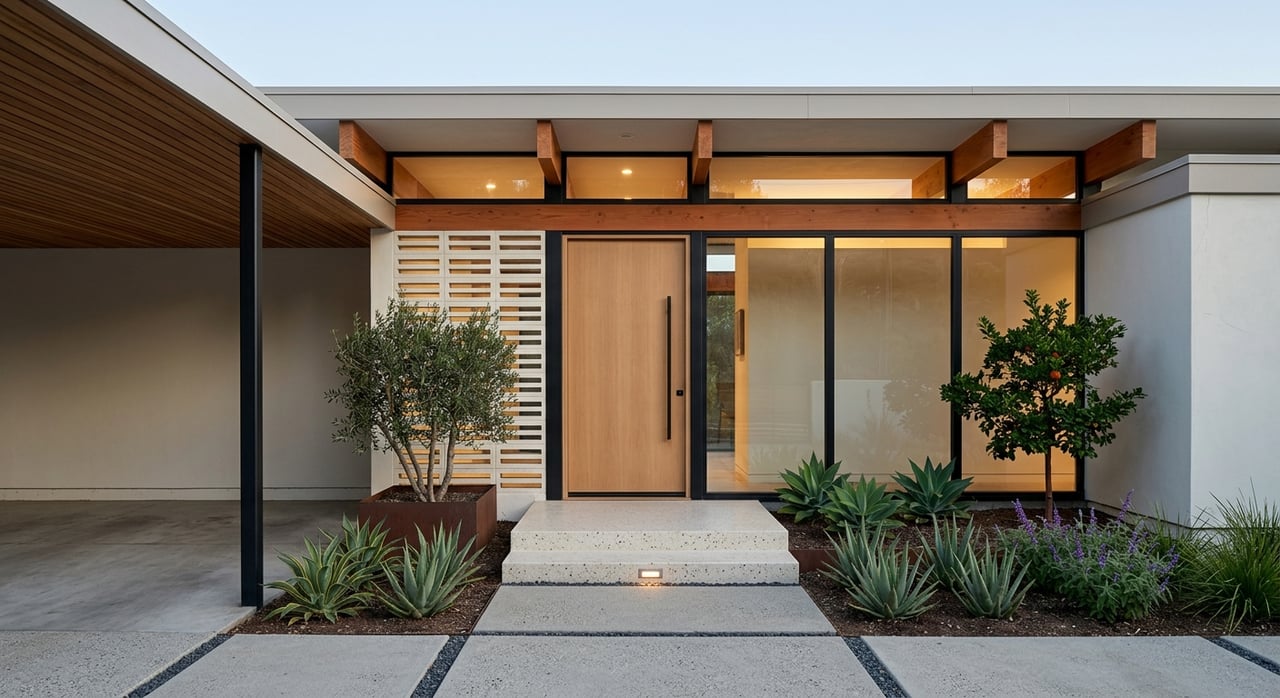
One of the clearest midcentury features is post-and-beam construction. The Los Angeles Conservancy describes it as a system where horizontal beams rest on vertical posts, allowing for low-slung forms, long horizontal lines, and large expanses of glass.
In Hollywood Hills, that structure often supports dramatic view orientation. Instead of heavy, enclosed rooms, the design tends to feel open, linear, and visually calm. The architecture works hard to frame the site rather than compete with it.
Glass, light, and openness
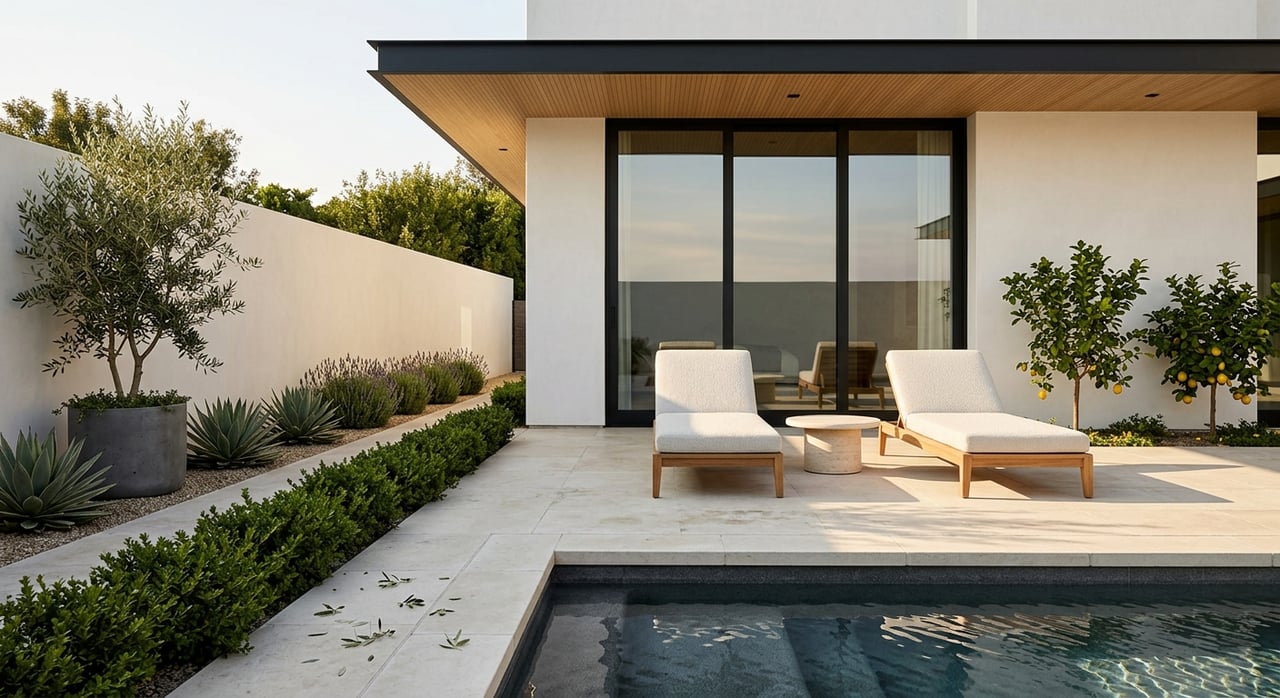
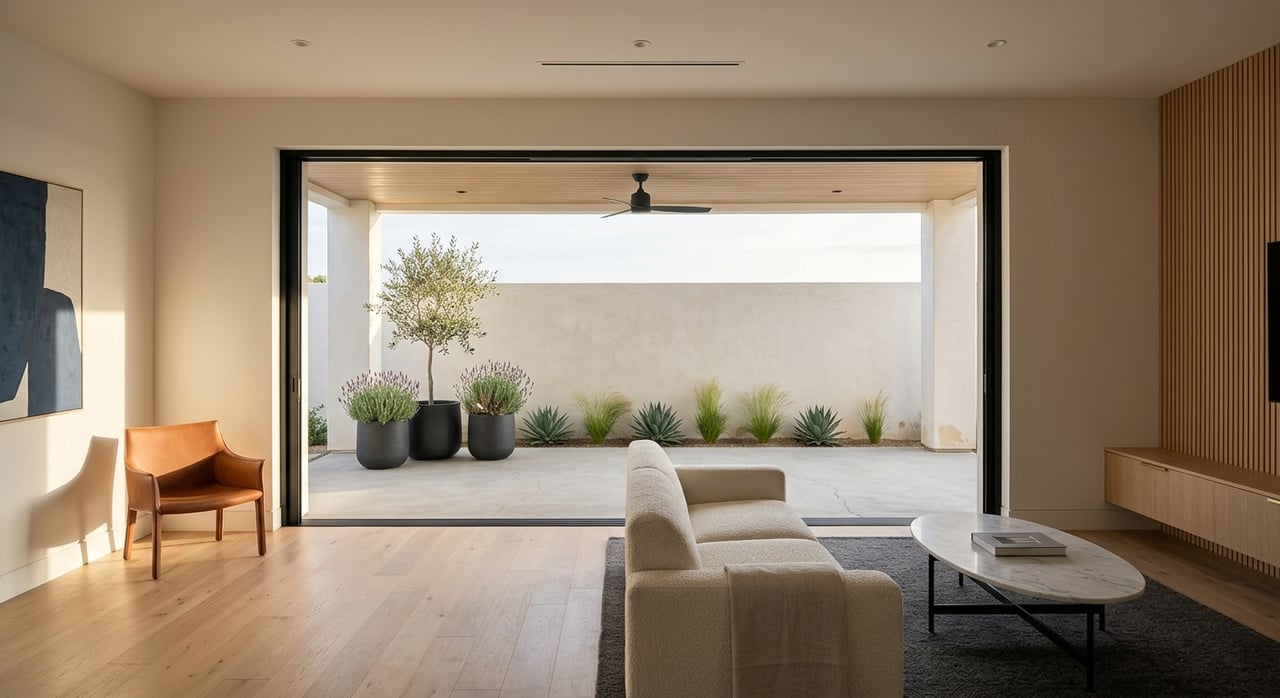
Large glass panels are central to the look and experience. Midcentury homes in the hills often use glazing to pull in daylight, connect interior rooms to terraces, and make the landscape feel like part of the home.
This is one reason the style still resonates with design-conscious buyers. The appeal is not just aesthetic. It is also about how a home lives from morning light to evening skyline views.
Indoor-outdoor flow
The Los Angeles Conservancy also ties midcentury design to integrated landscaping, indoor-outdoor environments, and natural light. In the Hollywood Hills, this often translates to patios, decks, and outdoor spaces that feel directly connected to the slope, the canyon, or the city-facing outlook.
That connection creates a very specific lifestyle. You are not just living inside a house. You are living in constant dialogue with the site, the weather, and the changing light.
Why hillside midcentury feels different
The site becomes part of the design
Hollywood Hills midcentury homes often turn constraints into signature features. The Stahl House, located in the Hollywood Hills, uses glass-and-steel construction, large glass panels, and roof overhangs to frame dramatic views. The Chemosphere, built on a steep lot, is another clear example of a house shaped by terrain rather than forced against it.
These homes help explain why hillside midcentury architecture feels so specific to Los Angeles. The slope, the outlook, and the engineering challenge are all visible in the final design. That gives the architecture a kind of honesty that many buyers find compelling.
Privacy and openness at once
One of the interesting tensions in this style is that homes can feel open and private at the same time. Extensive glass and view orientation create openness, while hillside siting can pull homes away from the street and toward the landscape.
For many buyers, that balance is a major draw. You may get light-filled interiors and wide views, while still feeling intentionally set apart from the surrounding city.
Perched, not embedded
There is also a tradeoff. The same hillside conditions that create dramatic architecture can make access more complex and maintenance more involved. The research points to terrain-related upkeep and the reality that many of these homes feel perched above the landscape rather than fully embedded within it.
That is part of the appeal, but it is also part of the ownership equation. Buyers should understand both sides of the experience, especially when comparing a hillside architectural home to a more conventional property.
The lifestyle behind the design
Midcentury architecture in the Hollywood Hills supports a lifestyle built around light, views, and spatial clarity. Rooms often prioritize outlooks over ornament, and the home’s best moments may happen in transition spaces like terraces, glass-walled living rooms, and patios tied closely to the land.
For daily living, that can mean a home that feels calm, open, and visually connected to its surroundings. The style often suits buyers who value design intent, privacy, and a less compartmentalized way of living.
It also tends to attract people who appreciate architecture as a value driver, not just a backdrop. In the Hollywood Hills, materials, proportion, original design character, and the relationship to the lot can all shape how a property is perceived in the market.
Hollywood Hills in the Los Angeles design story
A local version of California modernism
Hollywood Hills midcentury homes belong to a larger Los Angeles story. The Case Study House program, launched after World War II, explored postwar living through replicable methods and modern industrial materials. While it did not achieve mass production at scale, it helped define the visual language that many later hillside homes would echo.
That is part of why the style feels so tied to Los Angeles. The city’s own modernism context places midcentury design firmly within its hillside residential history, and Hollywood Hills remains one of the clearest examples of where that vision became a lived residential form.
More than a look
For buyers and sellers, this matters because the value of these homes often goes beyond square footage. Design pedigree, integrity of the original concept, and the way a house meets the site can all shape demand.
In a neighborhood where architecture carries real weight, a true midcentury home may stand apart from newer properties that borrow some of the style but not the deeper logic behind it.
What buyers should know
Original character matters
If you are shopping for a midcentury home in the Hollywood Hills, look beyond surface finishes. The defining features usually include post-and-beam structure, strong horizontal lines, expansive glazing, integration with the landscape, and a clear relationship to slope and view.
That means a renovated house can still feel authentic, but the core design should remain legible. If those essentials have been heavily altered, the home may read as updated modern rather than true midcentury.
Historic status can affect plans
Los Angeles’ HistoricPlacesLA inventory documents and maps historic resources, including Hollywood Hills properties evaluated as Mid-Century Modern resources. The inventory includes both individual examples and contributors within districts, such as the Upper Nichols Canyon Modern Residential Historic District.
If a property has local, state, or federal historic status, changes may involve additional review before permits are issued. The practical takeaway is simple: before planning a major remodel, expansion, or exterior change, understand whether the property has any historic designation or survey status.
Integrity can influence significance
The research also shows why intactness matters. A 1959 Nichols Canyon house identified in HistoricPlacesLA lost National Register eligibility after a later rear addition, even though it remained significant at other survey levels.
For buyers, that means original proportions, materials, and sightlines may matter as much as added space. For sellers, those same qualities can be important when positioning an architecturally significant home.
What sellers should know
Architectural storytelling matters
When you sell a Hollywood Hills midcentury property, the marketing should do more than list bedrooms and baths. Buyers in this segment often respond to the home’s relationship to the hillside, the clarity of the design, the quality of light, and the preservation of defining features.
That requires thoughtful presentation. Clean sightlines, editorial-quality photography, and precise language around layout, materials, and outlook can help buyers understand why the property matters.
Changes should be evaluated carefully
If your home has recognized historic significance, even a well-intended addition or alteration can affect how it is evaluated. As the HistoricPlacesLA example suggests, later changes can alter eligibility at certain levels.
That does not mean every update is a problem. It means owners should understand the property’s status and think strategically before making changes that affect massing, proportions, or visible design character.
Why this niche still commands attention
Hollywood Hills midcentury homes continue to attract buyers because they offer something hard to duplicate. They combine architecture, terrain, light, and lifestyle in a way that newer homes often try to emulate but rarely fully replicate.
In a market like Los Angeles, where street-by-street nuance matters, design-forward properties with strong site relationships can stand in a category of their own. If you are buying, selling, or simply evaluating a Hollywood Hills architectural home, understanding that distinction is essential.
If you are considering a purchase, a sale, or a strategic next step with an architecturally significant property in the Hollywood Hills, Antonio Bruno can help you evaluate the design, the market positioning, and the transaction strategy with clarity and discretion.
FAQs
What makes a Hollywood Hills home distinctly midcentury?
- A Hollywood Hills home typically reads as midcentury when it combines post-and-beam structure, horizontal lines, extensive glazing, landscape integration, and a strong relationship to the slope and views.
Why is midcentury architecture so closely tied to Hollywood Hills?
- The steep terrain, narrow winding streets, low-density hillside setting, and panoramic views helped shape the architecture, making the site itself part of the design.
What is post-and-beam construction in midcentury homes?
- Post-and-beam construction uses vertical posts and horizontal beams, allowing for open layouts, low-slung forms, strong horizontal lines, and large areas of glass.
What should buyers know before renovating a Hollywood Hills midcentury home?
- Buyers should first confirm whether the property has any historic designation or survey status, because recognized historic resources in Los Angeles may be subject to review before certain alterations are permitted.
Why does integrity matter for Hollywood Hills midcentury properties?
- Integrity matters because original proportions, materials, and sightlines can affect how a property is evaluated for historic significance and how it is perceived in the market.
What should sellers emphasize when marketing a Hollywood Hills midcentury home?
- Sellers should highlight the home’s architectural character, relationship to the hillside, natural light, views, and preserved design features, not just its size or room count.